Mission
Are we fulfilling our civilizational purpose?
Human development, joyful communities, educational, cultural, research, publications, and livelihood initiatives.

Mission. Creates transformation, the operational heart. Mission is where people are actually served and communities change. It asks: who are we serving, what problems are we addressing, what outcomes do we seek? Without it, the institution loses its purpose. It has five departments (Human Development, Culture & Community Life, Knowledge & Education, Community Economy, and Research & Publications) and 36 divisions. Money is spent and work is done in every one of them, whether or not a software module exists yet.
Four questions Mission work is meant to answer
5 departments
Human Development
Responsible for holistic human, family, cultural, social, and community development initiatives serving individuals, families, villages, towns, and communities.
MIS-CULCulture & Community Life
Strengthening community identity, cultural continuity, spiritual life, festivals, arts, traditions, and collective participation.
MIS-EDUKnowledge & Education
Responsible for educational systems, curriculum development, learning programs, training initiatives, online education, traditional knowledge transmission, and institutional learning.
MIS-ECOCommunity Economy
Responsible for community-based economic development, cooperative initiatives, livelihood enhancement, vocational empowerment, entrepreneurship, self-reliance, and sustainable economic systems.
MIS-RESResearch & Publications
Responsible for research activities, knowledge creation, publications, documentation, archives, intellectual output, and dissemination of educational and cultural resources.
All 36 divisions
Money is spent and work is done in every one of these. Not every division needs its own software module, and the pages say which have one.
Śiśu-maṅgala
Early childhood care, parenting support, and child well-being (infants and children 0–5 years).
MIS-HUM-BALBāla-vikāsa
Child development, character formation, values education, and holistic growth (children 6–14 years).
MIS-HUM-BLPBālikā-praśikṣaṇa
Training, education, empowerment, and leadership development of young girls and adolescents.
MIS-HUM-GARGarbha-vijñāna
Prenatal education, maternal care, family preparation before birth, and conscious parenting from conception.
MIS-HUM-DAMDāmpatya-jīvana
Marriage preparation, marital counseling, household harmony programs, and family stability initiatives.
MIS-HUM-PARParivāra-āṅgana
Family strengthening, parenting education, healthy household culture, and holistic family development.
MIS-HUM-NARNārī-utthāna
Women's development, empowerment, support networks, and leadership initiatives across all age groups.
MIS-HUM-YUVYuvā-śakti
Youth leadership, skills development, community service, career guidance, and personal character development.
MIS-HUM-VRDVṛddha-sevā
Elder care, vanaprastha life support, senior community engagement, and dignity-in-aging programs.
MIS-CUL-BHVBhakta-vṛnda
Community congregation development, devotional association, and nurturing of the community of practitioners.
MIS-CUL-KHEKhelā
Sports, recreation, games, physical culture, and healthy community engagement activities for all age groups.
MIS-CUL-MAHMahājana-maṇḍalī
Senior guides, community mentors, wisdom elders, and circles of experienced community leaders.
MIS-CUL-NATNāṭaka-mañca
Drama, theater, cultural arts, storytelling, and performance-based spiritual and educational initiatives.
MIS-CUL-SAMSaṁskāra
Cultural rites of passage, sacred ceremonies, traditional observances, and life-stage celebrations.
MIS-CUL-SANSaṅkīrtana-maṇḍalī
Kīrtana outreach, devotional music programs, congregational chanting, and public spiritual engagement.
MIS-CUL-UTSUtsava-maṇḍalī
Festivals, community celebrations, sacred calendar events, and collective spiritual gatherings.
MIS-EDU-CEDCommunity Education
Literacy programs, village education initiatives, non-formal learning, and community-based knowledge access.
MIS-EDU-DIGDigital Learning
Online courses, webinars, certifications, e-learning platforms, and digital educational content development.
MIS-EDU-GURGurukula
Traditional and integrated residential educational institutions, Vedic learning programs, and gurukula system development.
MIS-EDU-LEALeadership Education
Leadership training, ethics education, governance understanding, civic responsibility, and institutional character formation.
MIS-EDU-PUSPustakālaya
Libraries, reading rooms, archives, knowledge centers, and access to texts across traditional and contemporary domains.
MIS-EDU-TCHTeacher Development
Educator training, pedagogical development, instructional quality improvement, and teacher capacity building.
MIS-ECO-COOCooperative Development
Community cooperatives, producer collectives, self-help groups, and community-owned enterprise development.
MIS-ECO-GOSGo-sevā
Cow protection, goshala management, dairy systems, cow-centered community initiatives, and Vedic agricultural integration.
MIS-ECO-KRIKṛṣi-vijñāna
Agriculture, sustainable farming systems, organic production, food security, and traditional agricultural knowledge.
MIS-ECO-KUTKuṭīra-śilpa
Cottage industries, artisanship, handcraft development, and small-scale traditional enterprise promotion.
MIS-ECO-PASPaśu-rakṣā
Animal welfare, livestock care, veterinary support, and community programs for the protection and stewardship of animals.
MIS-ECO-SKLSkills & Livelihoods
Vocational training, entrepreneurship development, skill certification, and livelihood enhancement for community members.
MIS-ECO-SUSSustainable Communities
Self-reliance models, ecological stewardship, village sustainability, and community-level economic resilience.
MIS-ECO-WOMWomen Empowerment
Empowering women as primary partners in community and economic development through training, enterprise, and leadership.
MIS-RES-EDREducational Research
Curriculum design research, pedagogical innovation, learning outcome studies, and educational quality inquiry.
MIS-RES-KPRKnowledge Preservation
Documentation, archival preservation, oral history recording, cultural memory, and institutional knowledge protection.
MIS-RES-MEDMedia & Content
Digital content creation, video productions, podcasts, educational media, and multimedia communications.
MIS-RES-PUBPublications
Books, journals, newsletters, annual reports, research papers, and all formal publishing initiatives.
MIS-RES-SOCSocial Research
Community studies, household surveys, impact assessments, demographic research, and social development inquiry.
MIS-RES-VEDVedic Studies
Research into Vedic literature, philosophy, Dharmaśāstra, and classical knowledge systems of the Indian tradition.
On the ground
Mission work happens in villages, homes and centres, not at a desk. Field officers report from the field. The Field Officer Reporting module is designed to work from a phone, and its build status is shown on its page.
Field Officer Reporting →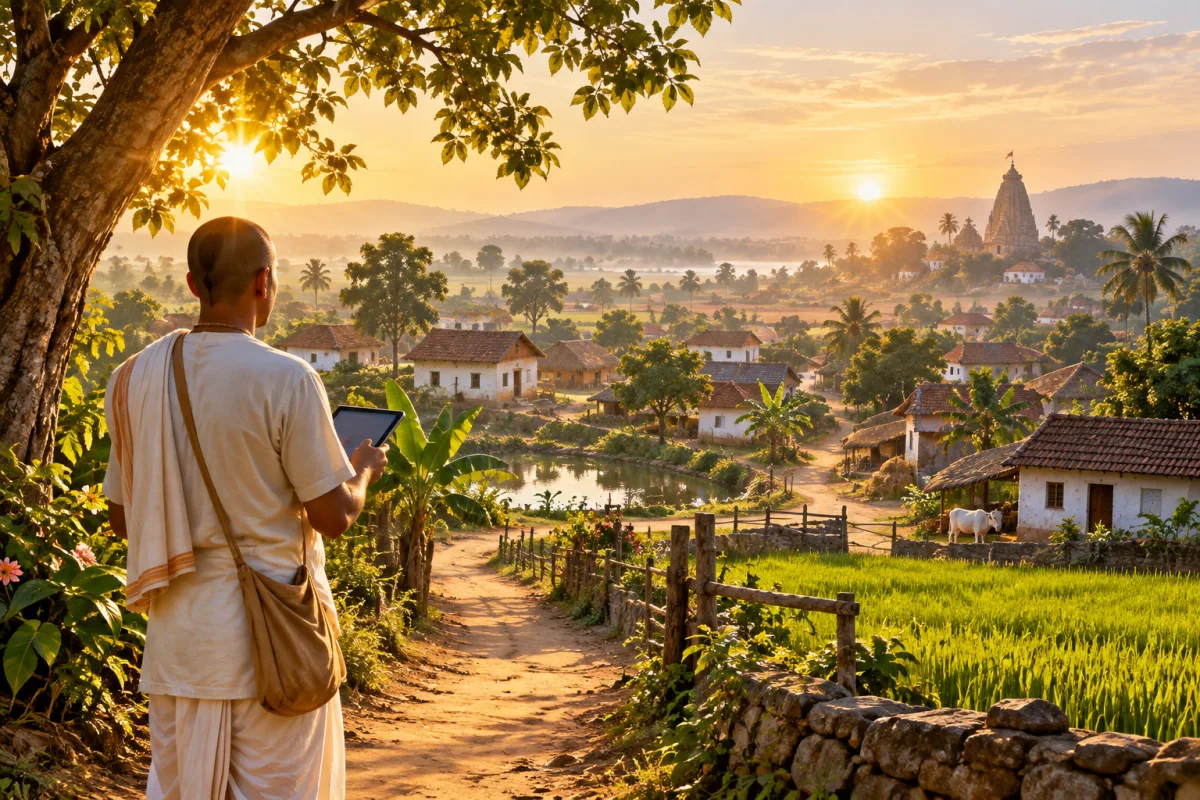
Shared Mission backbone
Modules that every Mission department uses.
Basis: the constitution’s Canonical Organizational Schedule (A8 v1.1). Module links come from the module specifications.

Test Dharma ERP and tell us what you find.
The trial uses sandboxed demo data across twelve core modules. Look around, try the forms, and review what works and what does not.